Seeing Australia from the Saddle: Multi-Day Horse Treks Worth the Trip
Australia 21 October 2026
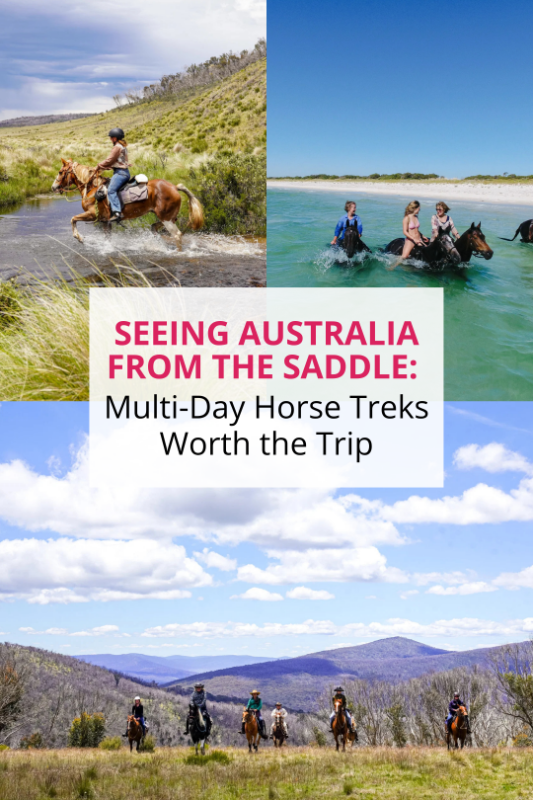


By the third morning, the soundtrack has changed. There's no engine hum and no indicator ticking, only leather creaking, hooves on gravel and a currawong somewhere up the slope. A horse covers ground at walking pace, and that turns out to be the speed at which a landscape starts to make sense. Plenty of Australia's finest country is reached by track, gorge or beach rather than bitumen. If you've already done the big road trips and want something slower and more memorable, a few days in the saddle might be it.
Snowy Mountains and the Victorian High Country
This is Man from Snowy River country, where mountain cattlemen once drove stock across steep, grassy ranges. Today you can follow high country trails around Mansfield and the Bogong High Plains, riding through snow gums and across open plains with long views in every direction. Treks usually run three to six days, with four to six hours in the saddle each day. The window is short, roughly December to April, once the snow has gone. Expect steady climbs and some rocky ground, so a reasonable level of fitness and a confident walk and trot are needed. On the New South Wales side, riding in Kosciuszko National Park is limited to certain areas, so check the rules with NSW National Parks before you plan a route.
Flinders Ranges, South Australia
The Flinders are old, red and dry, and riding here feels like moving through a slow-motion postcard. Tracks wind past the walls of Wilpena Pound, through dry creek beds lined with river red gums, and up onto ridgelines where you may spot yellow-footed rock-wallabies. Come between April and October. Summer days regularly pass 40 degrees, so rides are usually planned around the cooler hours. The ground is rocky and uneven, which suits riders who are comfortable at a walk and trot and can stay balanced on a steady horse. Multi-day rides often finish at a station or camp each night, with a long dinner and a very dark sky. Ask about water, too: the ranges are dry, and good operators carry plenty for riders and horses.
The Kimberley and Northern Territory cattle stations
If you've ever driven the Gibb River Road, imagine seeing the same country from a horse. In the Kimberley and parts of the Top End, some working cattle stations offer riding as part of a stay: early starts before the heat, rides to waterholes and along gorge edges, then shade and a cold drink by midday. A day's ride may cover around 20 kilometres, but it can cross several kinds of country. The dry season, roughly May to October, is the only realistic time, because wet season rain can close roads and flood creek crossings for weeks. Station rides are usually relaxed and mostly at a walk. Ask how many hours you'll ride each day, because the heat makes even short rides feel long.
A beach ride in Queensland, New South Wales,Tasmania or Western Australia
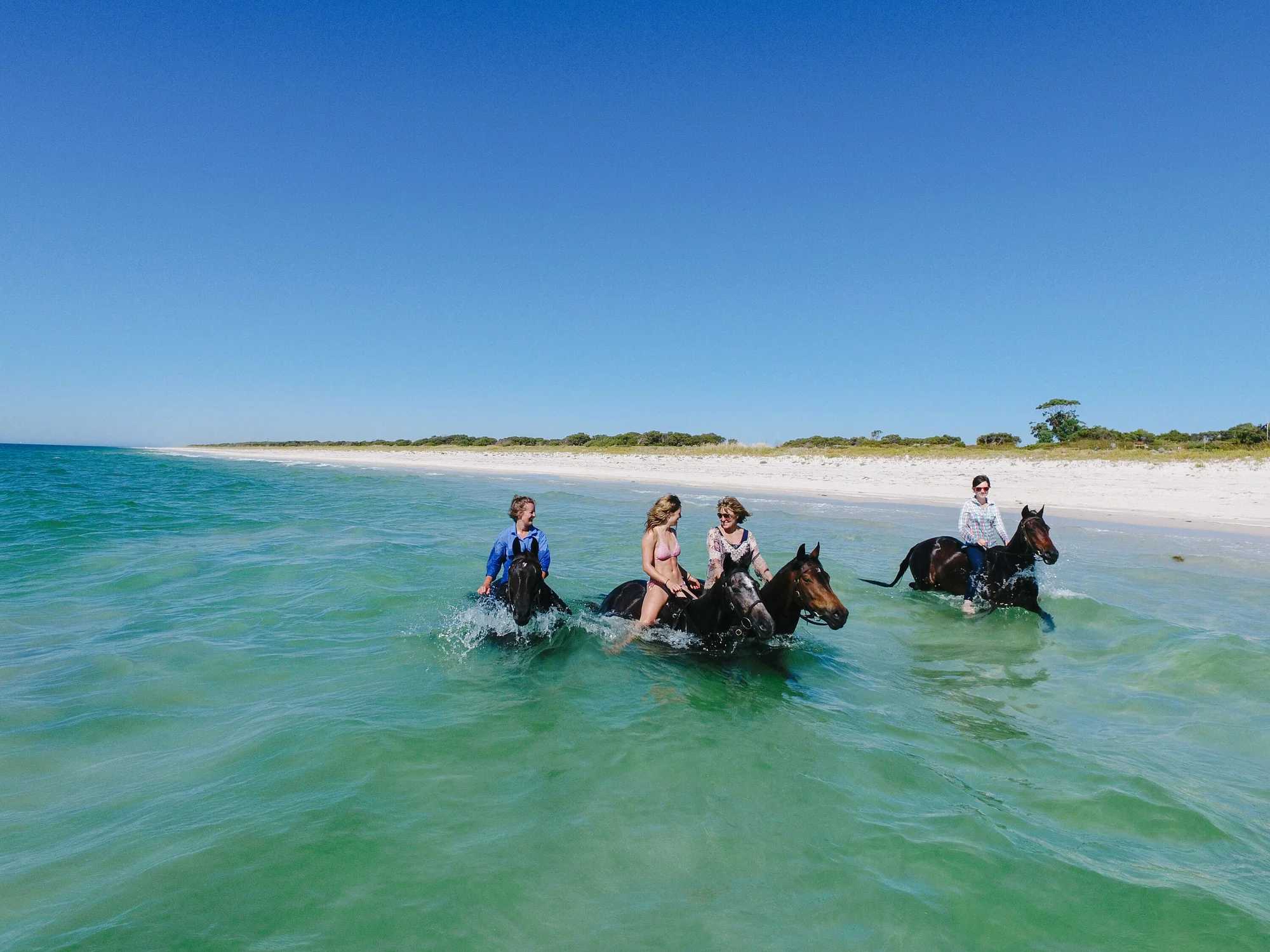
Beach riding is the easiest way to feel open space under a horse without committing to a long trek. On Rainbow Beach in Queensland, rides follow the firm sand near the water, with coloured sand cliffs rising behind you. Further south, the long beaches around Port Stephens in New South Wales are backed by dunes and wide skies. Rides are timed around low tide, when the sand is firm, so the ocean sets your schedule rather than the clock. Autumn to spring is more comfortable than the humid summer months. Most operators welcome beginners who can sit a walk and follow instructions. Rides usually last one to two hours, and some offer longer options. Bring sunglasses and sunscreen, because the glare off wet sand is stronger than it looks.
Tasmania's wilderness trails
Tasmania's high country has a mood of its own: tarns, moorland and weather that can change in an hour. Trail riding here is about quiet. You may ride for hours without seeing another person, then camp under a sky with no light pollution. Summer to early autumn, roughly December to March, is the calmest period, though nights stay cold and rain can arrive at any time, so waterproofs are not optional. Horses are not allowed in every national park, so ask which tracks your route uses. Riders should be comfortable on wet, uneven ground and ready for long days in the saddle. Pack dry socks in a waterproof bag and keep your layers within easy reach. Discover Tasmania is a useful starting point for region information.
A short ride near a capital city
You don't need to commit to a week to find out whether you like it. The Megalong Valley, roughly two hours' drive west of Sydney, sits below the cliffs of the Blue Mountains, with rides through farmland, creek crossings and eucalypt forest. Rides generally run from one to two hours, often with no experience needed, and the guides match you with a suitable horse. It's a good way to learn how your legs and back feel after a morning in the saddle, which is useful to know before you book anything longer. Most capital cities have something similar within a short drive, so look up your nearest valley or farm ride first. Wear closed shoes and long trousers, and ask whether a helmet is supplied.
Before you book
A multi-day ride is not a longer version of a one-hour trail ride. You may spend five or six hours a day in the saddle for several days in a row, and tiredness tends to show on day three. Be honest about your riding level when you enquire, because a good operator will ask and then match you to a horse and a route. Guides usually watch how you handle your horse on the first morning and adjust if needed. Check the weight limits, which operators set for the horse's welfare, and ask what is supplied. Pack for the weather, not the postcard: long trousers or riding tights, boots with a small heel, layers, a hat, sunscreen and a light waterproof. If you've never done more than a trail ride, it helps to book through a specialist. Globetrotting's Australian riding holidays, for example, match rides to your level before you book, which matters more than it sounds by day three.
One last thing
Break in your boots before you go. Blisters on day one will matter more than the scenery. Choose the season as carefully as the destination, because the same track can be a joy in April and a struggle in January. And if you're unsure, start small: a day ride close to home will tell you more about yourself in the saddle than any amount of reading.
Book your experience now!